Biomax Technology Systems fertilizers improve crop yields and enrich soil fertility
There is a growing need to boost food security and make Rwanda less reliant on food imports. But across the country, farmers are struggling against the effects of droughts and soil degradation. To respond to this, Biomax Technology System Ltd came up with an innovative solution working towards a shared goal with regard to country’s food security.


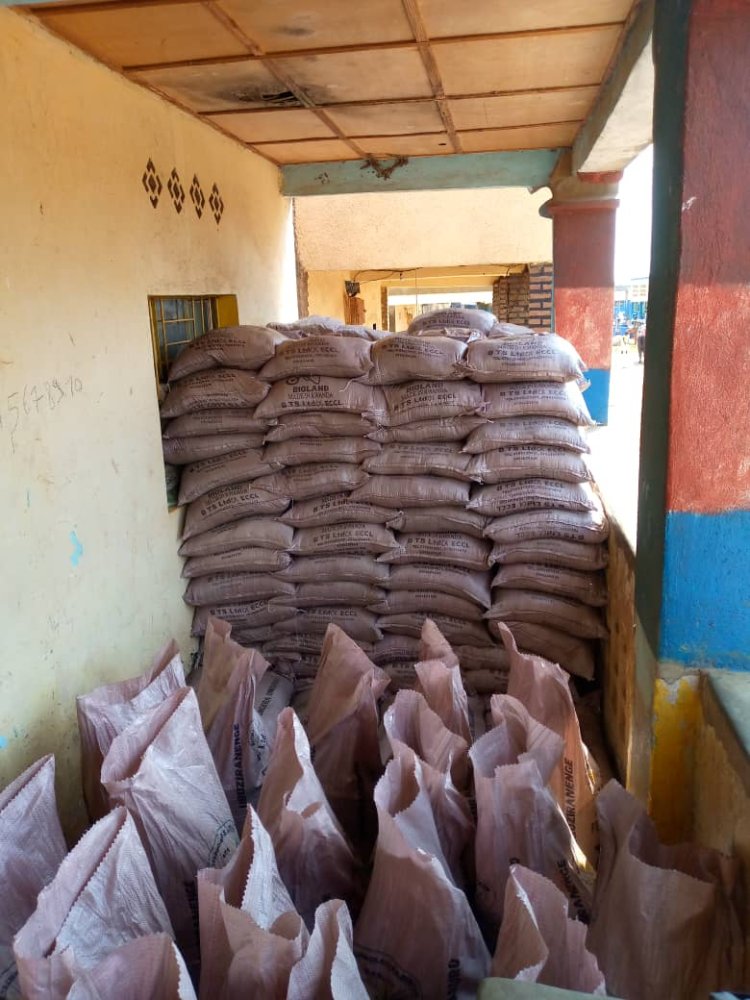
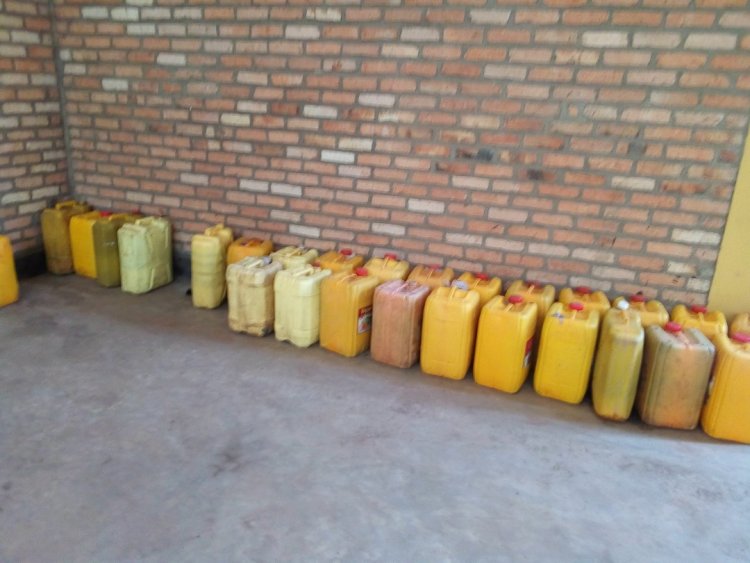

Biomax Technology System Ltd makes organic fertilizers and crop pesticides from wastes and farmyard manure, which not only increase yields on a given piece of land but also restores soil quality by neutralizing the impact of over use of artificial fertilizers.
“I don’t want to say that we’re helping farmers because we’re not doing anything for free but the fact is our business is for the farmer and for the land of our country. I wanted to give something back to society,” Eng. Dismas Habumugisha, the Manager at Biomax Technology System Ltd told Nation News.
“My conviction is to produce fertilizers and pesticides that restore soil capacity to allow water percolation, hold water for the crop, resist erosion and to add soil nutrients,” Eng. Habumugisha explained.
How fertilizers are made
The wonderful fertilizers are made from the collected garbage at landfills, separating decaying from non-decaying garbage.
“We have a challenge that the idea of separation of garbage for example biodegradable from non-biodegradable wastes is not yet cherished and garbage dumps still have mixed wastes,” he said.
After getting decaying garbage, the fertilizer makers mix it with solid and liquid farmyard wastes and natural plants such as the Mexican sunflower that are rich in nutrients to neutralize soil acidity.
“We use animal waste as usual but most importantly, we add plant materials such as the tithonia or Kimbazi. We use the Kimbazi plant because it is has high capacity in naturally fixing nitrogen,” he said.
Due to high acidic artificial fertilizers, soils are made acidic as well, killing most important bacteria that are needed in the decomposition process such as the nitrogen fixing bacteria.
Considering particular soils
Eng. Habumugisha said that they make different fertilizers suitable for particular soils and the crop to be grown on a farmland.
“For example the fertilizers we make for Ngororero district cannot be the same as the fertilizers we make for farmers in Nyabihu. Ngororero soils have higher acidity levels than Nyabihu. With those differences in mind, we make fertilizers that match the needs of the particular soil,” he said.
However, a farmer can choose to be more specific for his land by placing an order for the fertilizers that meet the challenges of his/ her farmland. Habumugisha said that farmers who have specific challenges with soils, especially those who want to plant particular crops on degraded soils tend to approach Biomax for their individual needs.
“In such circumstances, we go to the farmer’s farmland and advise him or her on what to do. We also collect soil samples from which we determine the ingredient levels in the fertilizers needed for a particular farmland,” he said.
The preciseness is important for particular farmlands, especially for different crops or soil degradation levels. “If for example a farmer wants to apply fertilizers on tea or banana plantation, we know such plants need much more nitrogen. We consider the nutrients to fix the soil needs and to feed the crops on the farmland for a given period of time,” he explained.
Biomax makes fertilizers that are fit for the general need of soil nutrients that most farmers in Rwanda would find suitable for their particular farmlands. Biomax makes these general fertilizers in a way that they meet both general soil degradation and nutrients level in the soil.
“We studied the way the urea fertilizers that most Rwandan farmers use. We went to France to study it’s manufacturing process,” the Engineer stated.
“We found that they use human or animal liquid wastes which they refrigerate and then add a catalyst they call ‘enzyme’. A kilogram of enzyme can decompose a tone of urine in 24hours.”
Eng. Habumugisha observed that the French Urea manufacturers add citric acid then crystallize the substance to become grainy with some sodium benzoate appearing white as snow.
“There’s nothing other than mixing such acidic compounds. I’m sure every farmer knows that getting into contact with urea fertilizers can harm the skin. It’s not body friendly, so it needs natural fertilizers to neutralize the excess of it in the soils,” he added.
Training farmers to make their own fertilizers
Beyond making products for farming, Biomax also trains farmers to make their own fertilizers from the domestic garbage.
“The truth is that the market is too huge for us. We can only satisfy 30% of the total demand for organic fertilizers. We decided to give basic training to farmers such that they can make their own fertilizers.”
The process is not complex since everything is naturally done and given the plenty of raw materials.
“There’s nothing extraordinary in making your own fertilizers. That’s why the agriculture ministry advises farmers to make rubbish pits and dump all the domestic rubbish including ash which decomposes into natural fertilizers,” he said.
To him, fertilizing crops is not a complex science.
“We all know that soils could regain capacity whenever a farmer skipped a season which increases the decaying vegetation in the farmland. Today, you may not be able to skip a season but you have the garbage that can work like massive vegetation decay in the farmland,” he said.
Except in cases where the soil has lost much capacity, Eng. Habumugisha urged farmers to visit Biomax for advice and training on how to make fertilizers for their farmlands.
“What I can directly tell farmers right away is that cow dung is not a fertilizer. Fertilizers are a mixture of several wastes,” he emphasized.
Biomax fertilizers can spend three years in the soil, increasing crop productivity as well as neutralizing artificial fertilizers because Biomax mixes several natural components.
“Farmers use 20 tonnes of farmyard manure per hectare. Our fertilizers are five tonnes per hectare. If the soil has been degraded due to artificial fertilizers, a farmer can add some quantity of Biomax fertilizers the following season. Then the soils will be fine for the next three or so years.”
About Biomax
Biomax Technology System Ltd started in 2019 upon the endorsement of Rwanda Agriculture Board (RAB), Rwanda Standards Board (RSB) and the National Agricultural Export Development Board (NAEB).
The company produces over 160 tonnes of fertilizers per day with a big clientele across the country.The raw materials are the usual domestic garbage and animal solid and liquid wastes, with much emphasis on the rare rabbit urine.
The company employs four permanent agronomists with over 60 labour units that keep manufacturing running, as well as more seasonal part time workers.
The company envisions manufacturing crystal fertilizes from floor such that their fertilizers can be grainy. “We’re very appreciative of the government policy not to tax agriculture product manufactures. It is helping us grow and a lower cost which is also good for farmers,” Eng. Habumugisha said.
Where to find the fertilizers
Biomax Technology System Ltd head office is located in Nyarugenge in Kigali.
Currently, the fertilizers can be found in at Mburabuturo Kayonza District, Rukomo and Rutaraka in Nyagatare District, Rutagara in Rubavu District, Gasaka in Nyamagabe District and at Cyuve in Musanze District.