Rwanda heightens surveillance after Marburg virus outbreak in Tanzania
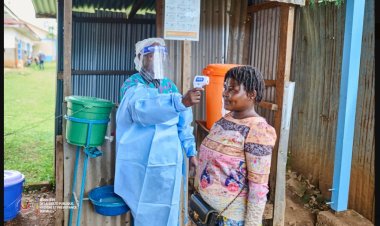
Public health workers and local leaders in eastern Rwanda’s Kirehe District bordering Tanzania are working together to heighten surveillance measures at the Rusumo common border, following an outbreak of Marburg virus disease in the neighboring country’s north-west Kagera region, officials said.


Bruno Rangira, the Kirehe District mayor, said they have ramped up preparedness involving public awareness campaigns on Marburg signs, prevention measures as well as plans for managing suspected cases.
“Public awareness is being carried out by health officials and local leaders targeting residents, including the border community and travellers traveling to Tanzania,” Rangira told journalists last week.
Rangira called on grassroots leaders and residents to play their role in preventing the disease outbreak in the country.
“We have enhanced readiness for the possibility of a virus outbreak, including setting aside isolation rooms at the district hospital and at the border," said Jean Claude Munyemana, the head of Kirehe Hospital.
Health personnel who used to screen for COVID-19 have been empowered to screen travellers for Marburg looking at the virus signs, he said.
Tanzania’s Ministry of Health last week declared the first outbreak of the deadly disease in the country, which has killed five people, with three others admitted.
Edson Rwagasore, the division manager, public health surveillance and emergency at Rwanda Biomedical Centre, confirmed that though there is no probable or confirmed case of Marburg in the country, the Ministry of Health saw it important to enhance surveillance at points of entry.
The risk of Marburg spreading to Rwanda from Tanzania’s Bukoba District which is about 300 kilometers from Rusumo border is low, according to Rwagasore.
Marburg virus disease is in the same family as the virus that causes Ebola, a highly virulent disease that causes haemorrhagic fever, with a fatality ratio of up to 88 percent.
Illness caused by Marburg virus presents abruptly, with high fever, severe headache and severe malaise.
Many patients develop severe haemorrhagic symptoms within seven days, and vaccines or antiviral treatments to treat the virus are yet to be approved.
The virus is transmitted to humans from fruit bats and spreads through direct contact with the bodily fluids of infected people, surfaces and materials.