Rwanda, South Korea sign double taxation avoidance agreement
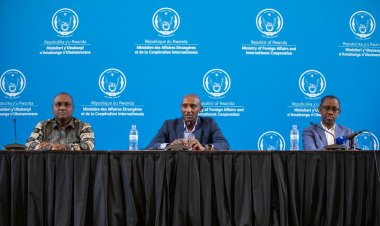
Rwanda and South Korea Wednesday signed a Double Taxation Avoidance Agreement on the sidelines of the ongoing 7th edition of Korea-Africa Economic Cooperation (KOAFEC) Ministerial Conference, in Busan, South Korea.
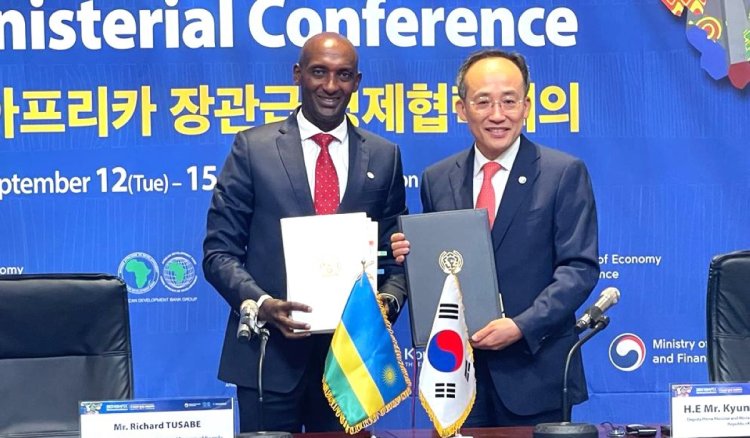

The agreement will in addition to attracting Korean investors to Rwanda, play an invaluable role in encouraging the outflow of investment by ensuring protection from discriminatory tax measures, providing an attractive withholding tax rate and a robust framework for dispute resolution.
Richard Tusabe, the Minister of State in charge of National Treasury said the agreement represents a remarkable milestone in the two countries economic cooperation history.
“The decision to pursue this agreement was driven by various factors, including the significant presence of Korean investors in sectors such as ICT, transport, education and health in Rwanda, the burgeoning cross-border trade, the increasing interest of Rwandan investors in exploring opportunities in Korea, our sound tax system, and the strong political relationship between our two nations,” he said.
The agreement is in alignment with Rwanda’s medium-to-long-term objective of positioning Rwanda as a thriving financial hub.
It thus underscores the importance of establishing a comprehensive treaty network, which is essential for future growth and prosperity.
With this the last pact, Rwanda has now signed 17 agreements with several others under negotiation.
The agreements continue to boost the inflow of investments and trade from treaty partners, with the bulk of investors to Rwanda coming from countries such as Turkey, Qatar, UAE, Mauritius, Morocco, South Africa, Singapore and Jersey among others.
Rwanda has been negotiating, and will continue to negotiate with countries that have sound tax systems to avoid treaty shopping, a practice commonly used by multinational enterprises to shift profits for foreign investors routing investments through low tax jurisdiction hubs.