EAC policymakers, private sector leaders vow fresh push to counter trade barriers
Policymakers and private sector players from the East African Community (EAC) bloc have committed to step up efforts aimed to reduce persistent and emerging trade barriers to regional trade.


The commitment was announced during a high-level multi-sectoral dialogue which closed in Rwandan capital Kigali on Friday.
The dialogue held under the theme "From commitment to action, scaling up regional competitiveness to unlock trade and prosperity in the EAC” drew policymakers, private sector representatives and regional experts.
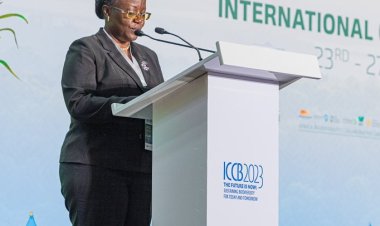
The EAC Secretary General Veronica Nduva, noted that the political will of regional leaders is evident but trade barriers remain such as lack of harmonized domestic tax which affects movement of goods across borders.
“We cannot continue with non-implementation. We cannot continue to have divergence between policy action and political will. Our eight partner states have different domestic taxes, how then will the goods move across the borders?” she said.
There has been an upward trend of trade among EAC partner states over the past decade, jumping from 6.42 billion U.S. dollars in 2016 to 15.25 billion U.S. dollars in 2024, according to Nduva.
But the low intra-regional trade accounting for only about 12 percent of total exports underscores the region’s persistent dependence on external markets, she said.
Earlier on Thursday, Rwandan Minister of State for Foreign Affairs Usta Kayitesi called on the region to accelerate digital transformation by improving connectivity, promoting interoperability of digital payment systems, and creating enabling policies that facilitate secure and inclusive cross-border digital trade.
Kayitesi called for stronger coordination among institutions, greater accountability and continued investment in infrastructure, including roads, railways, ports and inland logistics.
The Vice Chairman of the East African Business Council Dennis Karera mentioned the need to address barriers to labor and services mobility in the region, citing restrictions on professionals such as doctors, lawyers, architects, and engineers to work outside their countries.